

Are You Truly Awake? Series Part- 1 : The Sleepwalker, The Drunk Man, and You
We repeat the same patterns day in, day out, rarely pausing to reflect. Every morning, we wake up, carrying the emotional baggage of the previous day: Resentment, Anxiety, Insecurity, Jealousy and Anger, etc.
Mradul Jajin
12/6/20255 min temps de lecture
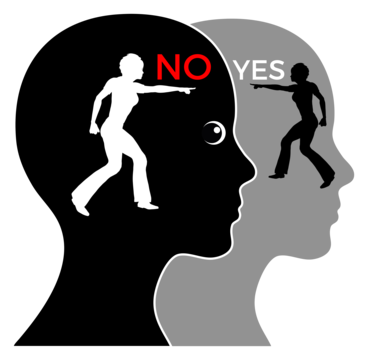
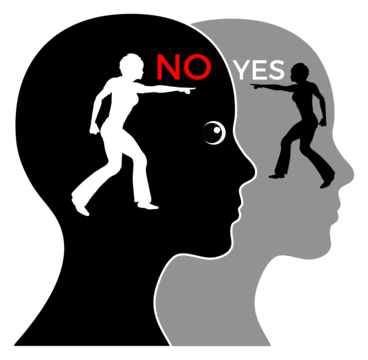
The Sleepwalker, The Drunk Man, and You: Are You Truly Awake?
Allow me to recount a tale that has completely transformed my perspective on life, not only because of its profound tragedy, but also because of the reflective nature it possesses, casting a spotlight on our own lives.
In 1987, Canada witnessed one of the most unsettling legal cases in its modern history. Kenneth Parks, a 23-year-old man who had lost all his savings in a failed business venture, was under extreme financial stress. He decided to visit his in-laws the next morning to seek their help and try to rebuild his life. However, something very scary happened that night.
What happened that night defied imagination.
Kenneth woke up in the middle of night, drove 23 kilometers to his in-laws home, brutally killed them, got back into his car, drove home, ate something, went back to bed. He was completely unaware of what he had done in the night. When he awoke the next morning, he had no memory of the events and no awareness of his actions.
At his trial in the Supreme Court of Canada, medical experts testified that he had been in a state of severe sleepwalking. The court acquitted him on the grounds of “non-insane automatism”. Legally speaking, he was not in control. "He was a vehicle being driven by a subconscious mind that was disconnected from reality."
You might wonder, why dwell on such a dark and rare tale? Because its essence is not rare at all.
Now imagine another incident, one that is much more common. A man has been out partying all night and is now exhausted and drunk. He drives back home. He unlocks the door, changes his clothes, eats something and collapses into bed yet the next morning he remembers almost nothing. He was awake but not fully conscious. He was operating on autopilot, a state of mind that is characterized by a subconscious mental process.
Now, ask yourself with raw honesty.
What is the fundamental difference between their state of mind and the way we live most of our days?
The uncomfortable truth is: very little.
While we may not commit any crimes in our day-to-day lives, most of us move through life in a similar state of subconsciousness sleep. We react rather than respond. Our actions are driven by repressed fears, emotional scars, past disappointments, our sense of self, and unquestioned habits. We repeat the same patterns day in, day out, rarely pausing to reflect. Every morning, we wake up, carrying the emotional baggage of the previous day, resentment, anxiety, insecurity, jealousy and anger.
These unresolved feelings silently influence our decisions. We snap at the people we love. We rush around mindlessly. We work with stress, argue, shout, repeat the same cycle again and again every day.
When our partner or spouse says a word, and we snap back with a tone forged in past hurts.
The way we react aggressively when someone suddenly overtakes us on the road in a car or on a bike.
We scroll mindlessly, worry endlessly, and rush relentlessly, led by the invisible hands of habit, fear, and unresolved pain.
Our words come less from awareness and more from reaction.
Our decisions arise not from clarity but from conditioning.
Our lives begin to resemble mechanical routines rather than conscious journeys
Have we been asleep while living?
We are surrounded by people yet feel lonely inside. Alive, yet not truly living. Our pain and anger become ordinary, a normal part of life. Our emotional isolation is invisible. Everything fades into habits, into routine, into quiet unconsciousness.
The Way Out: Mindfulness and Waking Up (Jagriti)
The question is, how do we wake up?
Buddha and the Upanishads suggested that practicing Jagriti (mindfulness and attentiveness) can help us stay awake.
As Jesus also suggested the same "Do Not Worry About Tomorrow" – The Practice of Present-Moment- Focus
This was perhaps the most direct call to mindfulness by Jesus :
"Therefore, do not worry about tomorrow, for tomorrow will worry about itself. Each day has enough trouble of its own." (Matthew 6:34)
The realization of our autopilot mode is not a cause for despair, but the first, crucial step toward awakening. This awakening is Mindfulness, the gentle, disciplined practice of returning to the present moment.
It is the art of observation.
You are not trying to forcefully stop your thoughts or emotions. You are learning to see them without being swept away by them.
Not through escaping life, but by observing it, moment by moment.
This awakening begins with Jagriti, with gentle awareness of:
Our breath as we walk, speak, or sit.
Our emotions without judging them.
Our reactions before they turn into words.
Our thoughts without being controlled by them.
Jagriti is not about becoming perfect; it is about becoming present. In daily life, it can begin simply:
Pause for a few seconds before responding.
Feel your breath when stress arises.
Watch your emotions without immediately acting on them.
Observe your thoughts as passing clouds rather than unquestionable truths.
Gradually Start your practice now.
Start with the Pause. Before reacting, whether to a stressful email or to a aggressive insult. Intentionally insert one deep breath. This breath is a space. In that space, you create a gap between the stimulus and your reaction. In that gap, your conscious choice can emerge.
Become the Witness of Your Routine. Pick one mundane activity like drinking your morning tea, brushing your teeth, or taking a shower. For those two minutes, commit to being fully there. Feel the temperature of the water, taste the flavor, notice the sensations. When your mind wanders to a past conversation or a to-do list (and it will), then just breath and gently bring your attention back. This is weight training for your awareness muscles.
· Label Your Emotions. When you feel a surge of irritation, worry, or sadness, pause and silently name it to yourself: “This is anger.” “This is anxiety.” This simple act of labelling creates distance. You are no longer just anger; you are the one observing the anger. It loses its absolute control over you.
Observe Your Thoughts Like Passing Clouds. Sit quietly for five minutes. Close your eyes and just watch your thoughts come and go. Don’t judge them, don’t follow them. Imagine they are clouds drifting across the sky of your mind. You are the sky, vast and still, not the clouds that temporarily pass through.
Listen to Understand, Not to Reply. In your next conversation, make it a practice to listen completely. Notice your autopilot mind itching to interrupt, to defend, to tell your own story. Choose instead to stay present with the other person’s words, tone, and emotion. This is mindfulness in relationships.
The Gradual Shift
You won’t break the autopilot in a day. Slowly, awareness replaces habit.
Instead of reacting, you begin choosing.
Instead of running from discomfort, you begin understanding it.
Instead of living unconsciously, you begin living fully awake.
This is the meaning of true awakening — not mystical, not distant — but deeply practical. It is the art of being aware in ordinary moments of life. Every conscious breath, every mindful step, every honest observation weakens the grip of our unconscious patterns.
The story of Kenneth Parks is a terrifying extreme. Our own sleepwalking is quieter, more socially acceptable, but its cost is the very essence of our lives. The call to wake up is not a dramatic one-time event. It is the quiet, courageous commitment to return, again and again, to this breath, this moment, this conscious choice.
Start observing today. Your awake life is waiting.
And gently, day by day, we wake up not from sleep, but from the unseen trance of an unlived life.
Question? Comment?
Share your thoughts with Mradul.


Ville Soulei - A Conscious Village Community
Ville Soulei, The Global Conscious Village, aims to establish a Self-Sustainable Community with an advanced state of the art Holistic Wellbeing Centre
© 2025. All rights reserved@villesouleifoundation
Follow us
Conscious Donation
Quick Links
Ville Soule
Our Founders
Please enter your email and submit. Our team will contact you. Thank you
contact@gmail.com
CONTACT US


support@gmail.com